Test!

Wednesday, 9 October 2013

La Vie En Roach

Kafka's The Metamorphosis. Roaches make people cry.
It is a terrible thing to never be quite at ease inside one’s own home, to be hyper-vigilant, alert but not alarmed. To constantly scan the walls and the crevices, to anticipate and expect an unwanted guest or ten. Anything could be one of THEM: a clump of hair, a chip of paint, a soft, scuttling feeling against the back of my hand. They are cockroaches. Always cockroaches.

Sydney has as many cockroaches as it has tourists sighing over the Opera House. The climate is ideal – moist, warm, never punishingly cold enough to stop them proliferating, spreading, and affluent enough that there will always be food in our bins and our houses.

How I hate their ancient armor, crazed, erratic movements, constant perseverance and resistance against bottled poisons. How I fear we are building up their immunity against roach-spray – we might be raising an army of super-bugs who cannot be killed. Nothing could surprise me – I imagine I will one day walk into my loungeroom to see a roach the size of Kafka’s nightmares, all tickly legs and drooling mouth. How it will laugh at the slipper in my hand.

One time I thought there was a near-ideal solution. In a move worthy of Jonathan Swift, we would eat the cockroaches. We would stuff ourselves full of them like champion cockroach-eater Edward Archbold. Then if we spotted them inside our homes we would pick them off the wall and down them as if there were no more than gummi bears. The thing about Archbold, though, is that he died after his epic roach-eating feat during which he downed dozens of them, gigantic ones to boot. An autopsy found this wasn’t from a kind of anaphylactic shock. No, insect parts had managed to suffocate him. Cripes. Even if you do your best to defeat them, even if you manage to masticate unfeasibly great numbers of them, in the end, the roaches always win.

Wednesday, 21 August 2013

Saying no to selfies

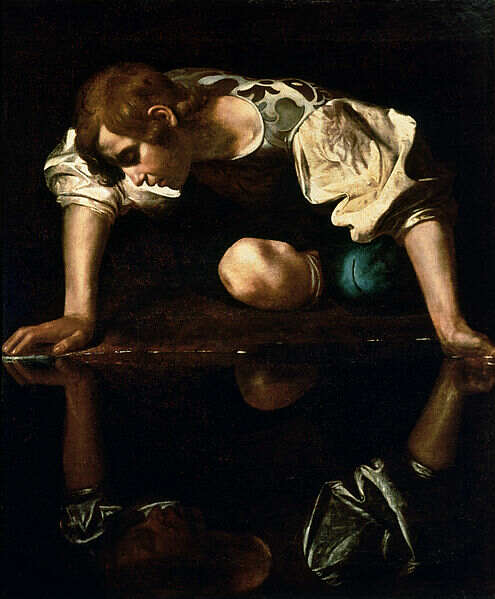
The original poser: Narcissus by Caravaggio
Instagram is a mindless pocket-based entertainment source - as you wish you can pull up a feed that reveals, in pictures, the carefully curated and aspirational lives of people you follow. Sure, you can find the odd feed that is brutally, hilariously honest, but usually (and I include my own feed - username theclairelow8 - in this) there's a lot of gorgeous food porn and sunsets and manicures. You know, la vie en rose where the rose is the beautifying filter.

A beloved friend of mine posts shot after shot of himself: his brooding face, his many outfits, his hand holding his phone because he can't seem to resist firing off another shot at his own reflection in lifts, and there are the flashback photos of him with different coloured hair, and at the beach in dark glasses, and on and on it goes. I wanted to do some data analysis and figure out what percentage of images he had posted were selfies; I got worn out by 35 or so. It's a bit wearying and I say this as someone who genuinely enjoys his brand of outsized ego. 

This kind of endless self-promotion is a bit more acceptable if you're a bona fide celebrity - Miranda Kerr, Jessica Gomes and their ilk spring to mind, you know, people who make a living on their looks who really do have legions of fans who will lap up each and every image they post of their beauteous face.

But if you're a narcissist without a fanbase, what is the point of all your selfies? If a selfie floats on the interwebs and nobody hits 'like', does it really exist?

Then there's the over-edited selfie - the suspiciously airbrushed kind, the kind that sparks ire from the friends whose newsfeeds they appear in. Filters are well and good but no filter will obliterate all of your pores and turn you into a perplexingly faux-looking person worthy of The Sims.

I am over selfies. I have been guilty of plenty of them in my time - as overwrought and self-consciously posed and over-filtered as you care. I am as big a narcissist as anyone. Maybe other people find my own photo selection - fingernails and food, trinkets and cats, handbags and jewels - makes them as violently ill as a bucketload of selfies makes me.

Selfies have reached saturation point; they say 'Nothing is more interesting to me than ME.' Time has an article on how the wealthy like to selfie and how narcissists know they are obnoxious but love themselves anyway. Can we please take a break? I think we can't, we can't tear ourselves away from this habit anymore than Narcissus can keep himself from dying as he stares at himself reflected in water.


Monday, 15 July 2013

Vale Cory Monteith / Finn Hudson (I never learned the difference until now)

When I was a little kid without much of an idea of what an actor was, I assumed they and the characters they portrayed were one and the same. This is why it did my head in when I watched Dean Cain talk about Clark Kent.

Fast-forward to now and I'm not sure I really learned the difference between an actor and his character. This is why I was shocked to the core about the recent death of Glee actor Cory Monteith. When I first read reports: alone, hotel room, no suspicious circumstances, I assumed a suicide rather than an overdose. Apparently, Monteith's struggles with drugs were well-documented. I must have missed those reports in spite of being a rabid Gleek. Maybe I didn't want to know. The idea of Monteith battling these kinds of demons is so profoundly at odds with Finn Hudson, his character, the handsome, popular, all-American teenager on the squeaky clean Fox show. Death by drug overdose makes sense for the Kurt Cobains of the world, but the idea that the man who tenderly serenaded Rachel Berry in Mr Schue's choir room could die this way did my head in just like my revelation about Dean Cain.

Because I didn't know the difference between Cory Monteith and Finn Hudson. A talented performer on the show, a talented performer in real life. In love with a gifted singing ingenue on the show, in love with a gifted singing ingenue in real life (Lea Michele / Rachel Berry, who I can imagine being like her character too: bossy, with vocal gifts oozing out of every pore).

The meaning of the Finn Hudson character and the reason why he was a gift to us Gleeks has already been explored at length, and more articulately by Ben Pobjie. And as for me I'll just try to forget that Cory wasn't Finn and Finn wasn't Cory. I could imagine him cold and alone in his hotel room, or have him in my mind in that other way: forever young, forever in love, forever dancing around Mr Schue's choir room with Rachel / Lea on his awkward, teenage feet.

Sunday, 14 July 2013

Forever Young - the rise of the haute kidult

It has been said I have the taste of a nine-year-old. This isn't an insult, it's a fairly good summary of me. The good thing is in my new life in a senior role at a magazine for tweenage girls, I am free at last to unabashedly love the cute stuff - to decorate my desk with Hello Kitty without restraint, to add Blythe dolls and Littlest Pet Shop without shame.

It's also carte blanche to reverse age - to choose childlike things which I've always liked best.

That's not to say it's time to plaster myself with cheap diamantes from Diva (not saying I have anything against Diva, or diamantes, or plastering myself with things). It's more about the somewhat slicker stuff, and I'm not the only one.

There must be huge numbers of people like me - haute kidults, that is, solvent adults with a taste for high-end kiddy kitsch complete with price tag to set it out of reach of bona fide kids except Suri Cruise. How else to explain the popularity of Mawi x Disney Couture, the existence of implausible diamond Hello Kitty jewellery, and the fact the Tokidoki x Karl Lagerfeld figurine (plastic!) costs nearly AU$200? Lagerfeld himself must be young on the inside - he gave his cat, Choupette, an iPad, which sounds like something a child would do.

I am 27 years old. When faced with a big, square and sensible Mulberry Bayswater in thick black leather, I inevitably reached for a raspberry mini Alexa, a handbag so weeny it cannot fit my diary. It occurred to me the Bays was the better investment - the sort of bag that could see me through to age 90 and then some. It also occurred to me that something so practical could make me feel like I was age 90. No, far better to go for a bubblegum-pink shrunken It Bag, one that I lovingly pet as if it were a teacup Yorkie. This is after vetoing a mint green Mulberry with flower clasp - that I feel really IS like a child's bag, that looks like something out of Forever New on a good day. It is so little I have grave fears more than an iPhone could be tucked inside and its discount price tag was still the princely sum of more than AU$400.

Fun fashion is ageless, I think. I never believed in those 'How to dress for your age' articles anyway. Let me wear my cartoon cats and fluffy ears beanies (no matter how much Guardian writer Hadley Freeman decries them). Let me be a haute kidult - I found the fountain of youth and it looks at once cheerful and eye-wateringly expensive.

Sunday, 30 June 2013

That stuff I wrote that ended up in a book ... uh ... never mind


I'm in this book!
I’m not as good a self-promoter as I once thought myself to be.

I used to spruik stories I had written that I was proud of via Facebook. This dried up.
I, like a lot of writers, have what another writer friend has described as that ‘look at me, but don’t look at me’ thing.
I can better explain it like this: I would love to have teeming masses of readers, however, if someone close to me reads something I penned, it can get cringey.
To use an (awkward) analogy, if a nude picture of me leaked out and thousands saw it, I’d probably shrug, but if my boss and my colleagues and my kindergarten teacher saw it, that’s when I’d want to hide for a while.
That’s what writing is like – being naked. If you’re doing first-person stuff, you need to throw in lots of juicy, slimy, filthy revelations. Your story can’t be the equivalent of a sympathetically-shot, highly-edited and airbrushed image of you; far better that it be like a grainy, tabloid-style image of you scratching your butt. That’s more riveting.
The more personal the writing the worse the ‘look at me, don’t look at me’ gets. A newspaper report on a council meeting? Fine. Memoir? Cringey. Fiction? Really, really cringey.
Well, maybe that’s just me. If people I know read stuff I write, I fear my sentences and plot lines and story arcs and characters could warp their opinions of the real me. I fear revealing something about myself. Eww.
Anyway, this is all a roundabout way of saying I got something published in a book this year: a short essay called Newsrooms, a survivor’s guide. It is published alongside 36 other pieces in this year’s edition of The Emerging Writer, a book for rookie writers that was launched recently in Melbourne. Oh – one of the other contributors is Shaun Tan and that gave me a severe fangirling moment. If you’ve read The Arrival (not that it has any words) you’ll know what I mean – Shaun is a giant.
My essay was something I penned right towards the end of my time at a daily broadsheet newsroom. I pitched to be part of this ages ago because I knew I had some things to say. In newsrooms, you get to do lots of weird shit and that makes for good stories. I think it’s why I love journalism so much – the weird shit.
Some of my current crop of colleagues read my piece and said nice things about it. It was lovely but kind of excruciating. You know, because of the ‘look at me, don’t look at me’ thing.

It was this feeling times a million when I once showed my mum a short story I’d written. It wasn’t one of the pieces that had attracted modest acclaim (I’ve been shortlisted and highly commended for a fiction prize, twice), it was some other thing that had popped into my head and, like a lot of stuff percolating in my brain, had its unsavoury aspects. For example, one of the three incarnations of the same female character was a fetish film actress. I emphasised to mum that I had made the whole thing up: this character wasn’t me. I wasn’t her. These were cringey, cringey times.

I explained this predicament to my creative writing teacher, Craig. He said, wryly, “I’m sure Kafka went through the same thing. I’m sure he had to say, “Mum, I’m not a cockroach.”

Thursday, 20 June 2013

Five questions for Nancy Jo Sales on The Bling Ring

I have a thing for Vanity Fair; I think we all do. In its archives you can find socialite spats and lurid murders and wine fraud and supermodel children and tales of a cowboy ranch of scholars in the wilderness that sound too romantic to be true.

Nancy Jo Sales, a contributing editor, writes of the Brant Brothers and Hugh Hefner, of Paris Hilton’s desire to be called a normal teen (back when she was a teen, but far from normal), and of the ‘Golden Suicides’ that rocked the art world. And, crucially, she wrote of a gang of kids whose rabid thirst for luxury goods, specifically, the property of Hollywood celebrities, led them to a crime spree the kids called ‘shopping’. Her story, The Suspects Wore Louboutins, inspired the Sofia Coppola film The Bling Ring and Sales has a book out by the same name that expands on the case in minute detail and provides the zeitgeist: the state of the world while the crimes were being committed.

Sales took five questions via email, even though she had a deadline looming.

1. The kids of the Bling Ring are amazing characters – in a lot of ways stranger than fiction. Did anything about them surprise you while you were interviewing and researching them?

Nick Prugo surprised me with his openness, telling me things that he hadn't even told the police. Alexis Neiers was a surprise in so many ways, although I've heard from kids who live in the Valley that she is more representative of today's Valley girls than I knew. Overall I was surprised by what seemed to be the group's blase attitude towards what they had done (except for Nick, in the end) and the fact that they apparently never discussed either the moral implications or possible real world consequences.

2. You’ve been thorough and comprehensive in talking with the kids (when possible), their lawyers, their parents, their school friends, law enforcement and others. How long did it take to do all this – to lay the groundwork for the article The Suspects Wore Louboutins, then the book version, The Bling Ring?

The article was about three months of research and writing. The book was about six months of research and writing. Both were done pretty fast, especially the book. But these are also things I've been thinking about a long time, reporting on kids for almost 20 years.

3. Your book explains the kids’ MO in great detail: it’s a pretty good how-to guide to robbing the rich and famous. As far as you know, has this case encouraged any copycat crime? Are other kids feeling inspired to go on “shopping” sprees at famous homes?

I've been really glad to hear the feedback I've been getting on the book. Mostly it's young women telling me how much they're glad for the opportunity to have a conversation about our culture's obsession with fame and wealth and how this isn't what they want their generation to be focused on.

4. Alexis Neiers and her mother clearly were upset about your article. What kind of response has she and other Bling Ring kids had to the book and Sofia Coppola movie?


I'm not sure...maybe they have said something which you could find out online?
(Taking Sales’ suggestion, I found this on Perez Hilton: "We already know that Alexis, the real-life inspiration for Sofia Coppola's The Bling Ring, is NOT happy about the way she's portrayed in the movie. Since then, Neiers has taken matters into her own hands. She's now in the process of writing a book that will explain how things REALLY went down.")

5. Your book explains a few people have been sort of envious of the kids and their ballsy approach to taking what they wanted in that they’ve said they wished they’d been part of the Bling Ring. Can you imagine, under the right circumstances, yourself doing what those kids did?

I grew up in a loving but strict household; my parents taught me that if you want anything, you should be prepared to work for it. My dad used to come down on me pretty hard if I got anything but As in school, and as soon as I graduated college, I was expected to get a job and support myself. So I can't really imagine doing something like that. I think parents today raise their kids with a lot more indulgence and sometimes this isn't necessarily a good thing.


Tuesday, 11 June 2013

Conversations with Mr OPI, the man of many manicures

OPI President George Schaeffer goes to Alcatraz.
George Schaeffer is broad-accented and big and also bubbly, with a kind of charm that is in his affability, I think. He's fast-talking, confident, a man of the world. Also: this man knows nail polish. Like really knows it. 

George is the man. He's OPI's CEO and president. Top of the food chain. But not intimidating. You know, you'd spend all afternoon talking with him about your mani-pedi routine and he'd never blink.

"Best seat in the house," he says as I pull up a chair beside him at a recent OPI launch, for their new San Francisco range, at a themed breakfast in Rose Bay. He's right. We talk.

Claire: Has there ever been a colour trend around the world that surprised you?
George: Well, Lincoln Park after Dark was very interesting. We believed in the dark colour, we came out with it and it died. A year later, it was the biggest colour we ever had. It had to have time. Suzi [Weiss-Fischmann, OPI’s colours genius], usually is ahead of her time.

Most other ones have taken off. It's been good. Shatter, for example, was huge but the speed that it died was beyond incredible.When it had its moment, it went like this (he gestures): through the roof

There’s some concern business-wise about Liquid Sand. I think it’s going to be different. People are not jumping into it, they are a bit skeptical. But the colours are wearable and [the effect] is pretty cool also. Glitter with a texture. I think it’s going to have much longer legs.

Claire: Have you noticed an evolution in what women want over the course of OPI’s lifetime?

George: Absolutely not. People will just go with whatever they’re comfortable with, especially with nail polish. It’s complete freedom. I think whatever makes them happy in that moment, it’s good. Seasonality? There is no seasonality.

Claire: You touched on the lipstick index: women reach for red when the economy is depressed. Is there a nail colour they go for when the economy is not looking its best?

George: Any and all. Nail polish surpassed lipstick last year. It’s probably a $2 billion business.

Claire: What do you attribute its growth to? Is there an emotional connection between women and their nail polish?

George: It’s affordable luxury. To buy a great lipstick it’s $30 or $40. You get more fun out of nail polish on your fingers. The colours are much more active.

Prison, huh? Oh, darn, not again. This is me pre-mani, forgive the nails.